After cardio and endurance: plunge immediately
For runners, cyclists, swimmers, and anyone doing conditioning work, cold water immersion within 30 minutes of training is consistently supported by research. A 2012 meta-analysis of 17 studies published in the Cochrane Database found that cold water immersion (50-59°F for 10-15 minutes) significantly reduced delayed onset muscle soreness (DOMS) after endurance exercise.
The mechanism is straightforward: cold constricts blood vessels, reducing inflammation and swelling. When you rewarm, fresh blood flow flushes metabolic waste. For endurance athletes, this accelerates recovery without a meaningful downside, since you're not trying to build muscle with cardio, and the anti-inflammatory effect is purely beneficial.
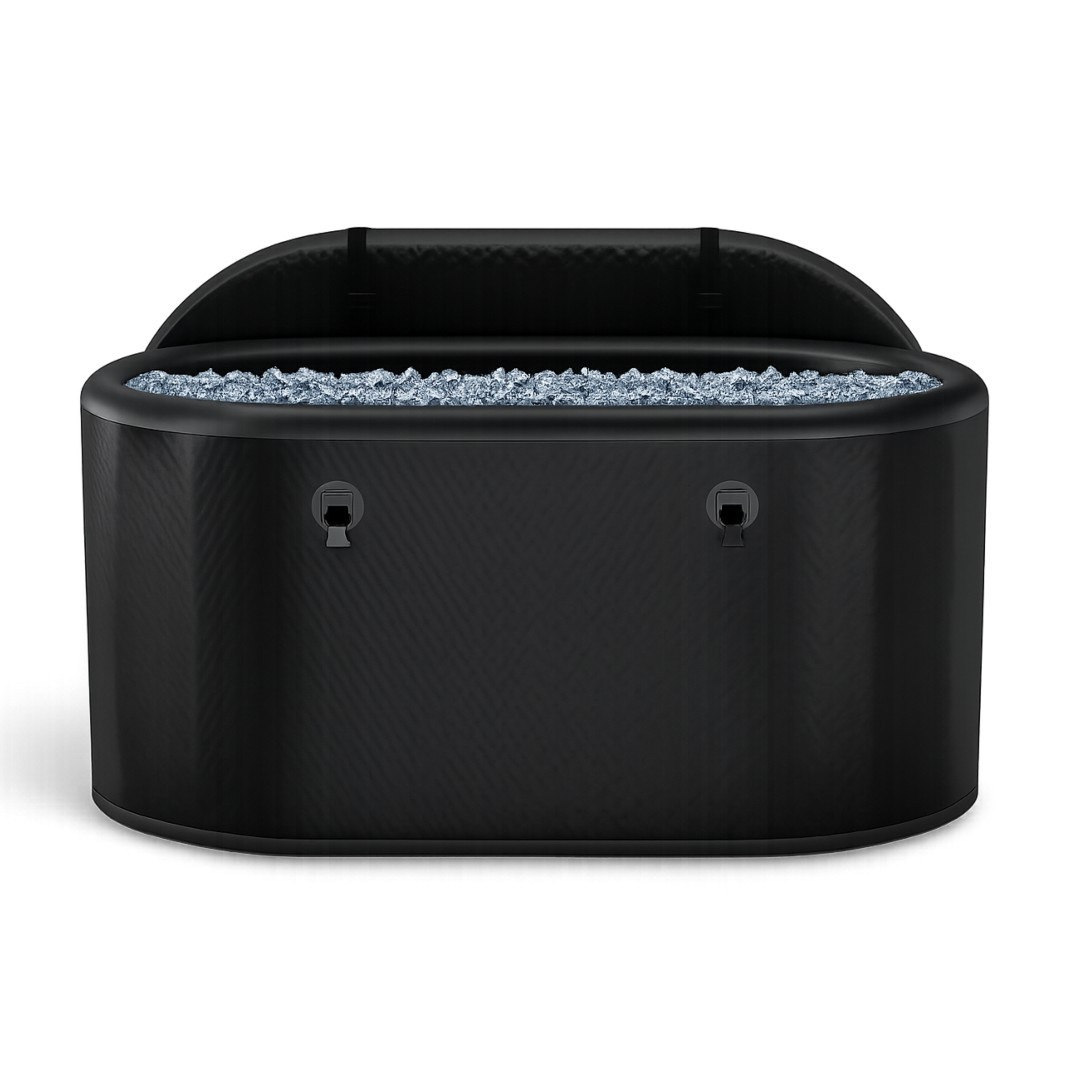
A tub like the Canuck Portable works well for post-cardio plunges since you can prep the ice during your cooldown.
After strength training: the timing trap
This is where it gets nuanced. A landmark 2015 study in the Journal of Physiology found that participants who used cold water immersion immediately after resistance training for 12 weeks had significantly less muscle growth and strength gains than those who did active recovery.
The reason: inflammation after strength training isn't just damage. It's the signal that triggers muscle protein synthesis. Cold exposure blunts that signal. The inflammatory response you're trying to reduce is the same process that builds muscle.
The practical recommendation: if your primary goal is hypertrophy (muscle growth), wait at least 4-6 hours after lifting before plunging, or save cold exposure for rest days. If your primary goal is recovery between training sessions (tournament athletes, multi-event competitors), the immediate plunge trade-off may be worthwhile.
Before a workout: use sparingly
A brief cold exposure (60-120 seconds) before training can work as a nervous system activator, and the norepinephrine spike increases alertness and focus. Some athletes report feeling "sharper" after a quick cold hit.
But a full 3-5 minute plunge before lifting is counterproductive. Cold reduces muscle temperature, decreases nerve conduction velocity, and temporarily impairs power output. Your muscles perform worse when cold. Save the full plunge for after or for rest days.
The practical protocol
Training days (strength focus): Train → wait 4-6 hours → plunge 2-3 minutes at 50°F, OR plunge on rest days only.
Training days (cardio/endurance): Train → plunge within 30 minutes → 5-10 minutes at 50-55°F.
Rest days: Plunge anytime. This is the best day for a full, extended cold exposure session without any interference with training adaptations.
Competition/tournament days: Plunge between events to speed recovery. The acute recovery benefit outweighs any muscle-building interference when you need to perform again in hours.
For contrast therapy, combining cold plunge with sauna sessions, the same timing rules apply. Do the sauna first (heat promotes blood flow), then cold to finish.