The core protocol
Temperature: Cold enough that you want to get out but can safely stay in. For most people this lands between 45°F and 55°F (7–13°C). The landmark Šrámek et al. study from the European Journal of Applied Physiology (2000) used 57°F (14°C) water and found a 250% increase in dopamine and a 530% increase in norepinephrine after one hour of immersion. You do not need to go that long. The key insight is that the temperature threshold matters more than extreme cold.
Duration: 1 to 5 minutes per session. Huberman emphasizes finding the minimum effective dose. The neurochemical response (the dopamine and norepinephrine surge) begins within the first 30 seconds of immersion. Longer sessions amplify the effect but with diminishing returns past 5 minutes for most people.
Weekly volume: 11 minutes total per week. This is Huberman's most cited number, drawn from research by Dr. Susanna Søberg. It breaks down to roughly 2–4 sessions per week at 2–5 minutes each. The total weekly cold exposure matters more than any single session.
Why these numbers matter
The 11-minute weekly minimum is not arbitrary. Søberg's research found that this threshold was sufficient to activate meaningful metabolic and neurochemical adaptations, including increased brown fat activation, improved insulin sensitivity, and sustained elevations in baseline dopamine.
The key word there is baseline. Unlike caffeine or other stimulants that create a spike followed by a crash, cold exposure raises your resting dopamine level. The Šrámek study found that the 250% dopamine increase was sustained and gradual (not a sharp peak) and the effects persisted for hours after exiting the water.
This is what makes cold plunging fundamentally different from other dopamine-triggering activities. The elevation is slow, sustained, and does not deplete your dopamine reserves.
How to actually follow it
Week 1–2 (adaptation): Start at 60°F (15°C) for 1 minute. Your only goal is to get in, control your breathing, and get out. The physiological adaptation begins here. Your body is learning to manage the cold shock response.
Week 3–4 (building duration): Drop to 55°F (13°C) and work up to 2–3 minutes. You should feel uncomfortable but not panicked. Controlled breathing is the skill you are developing.
Week 5+ (protocol mode): Settle into your working temperature (45–55°F for most people) and aim for 11+ minutes per week across 2–4 sessions. This is your maintenance protocol.
End warm, not cold. Huberman recommends letting your body rewarm naturally after a cold plunge rather than jumping into a hot shower. The shivering process itself increases metabolic rate and extends the norepinephrine response.
What you need at home
The protocol is simple but consistency matters, which means the friction of your setup matters too. If you have to buy and haul ice every session, you will skip sessions. If the water temperature is inconsistent, your protocol is inconsistent.
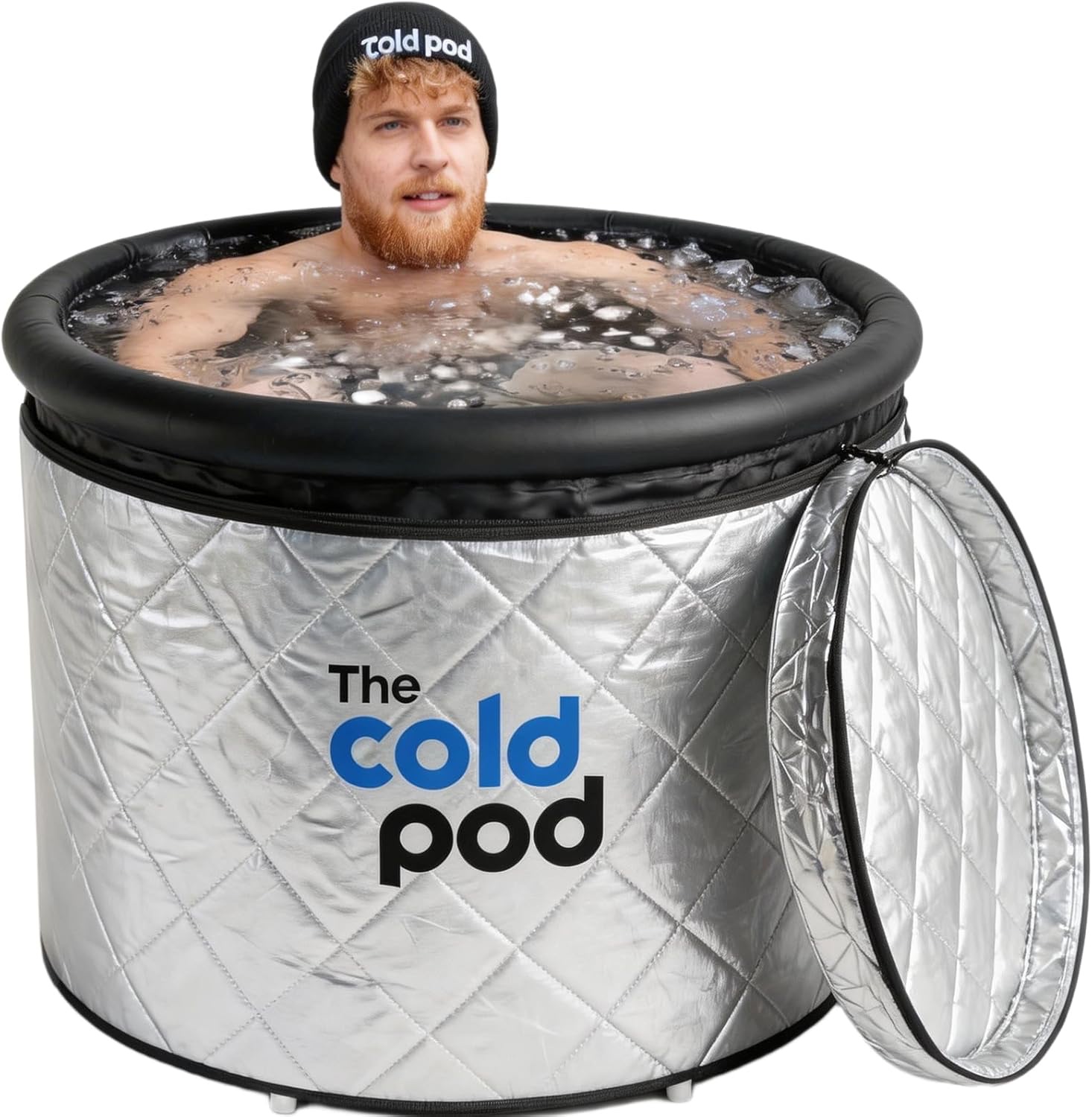
If you are testing the habit ($99–$200): A portable tub like the Cold Pod gets you started. Add ice manually, plunge, drain. It works. The limitation is temperature control: you are estimating, not measuring precisely.
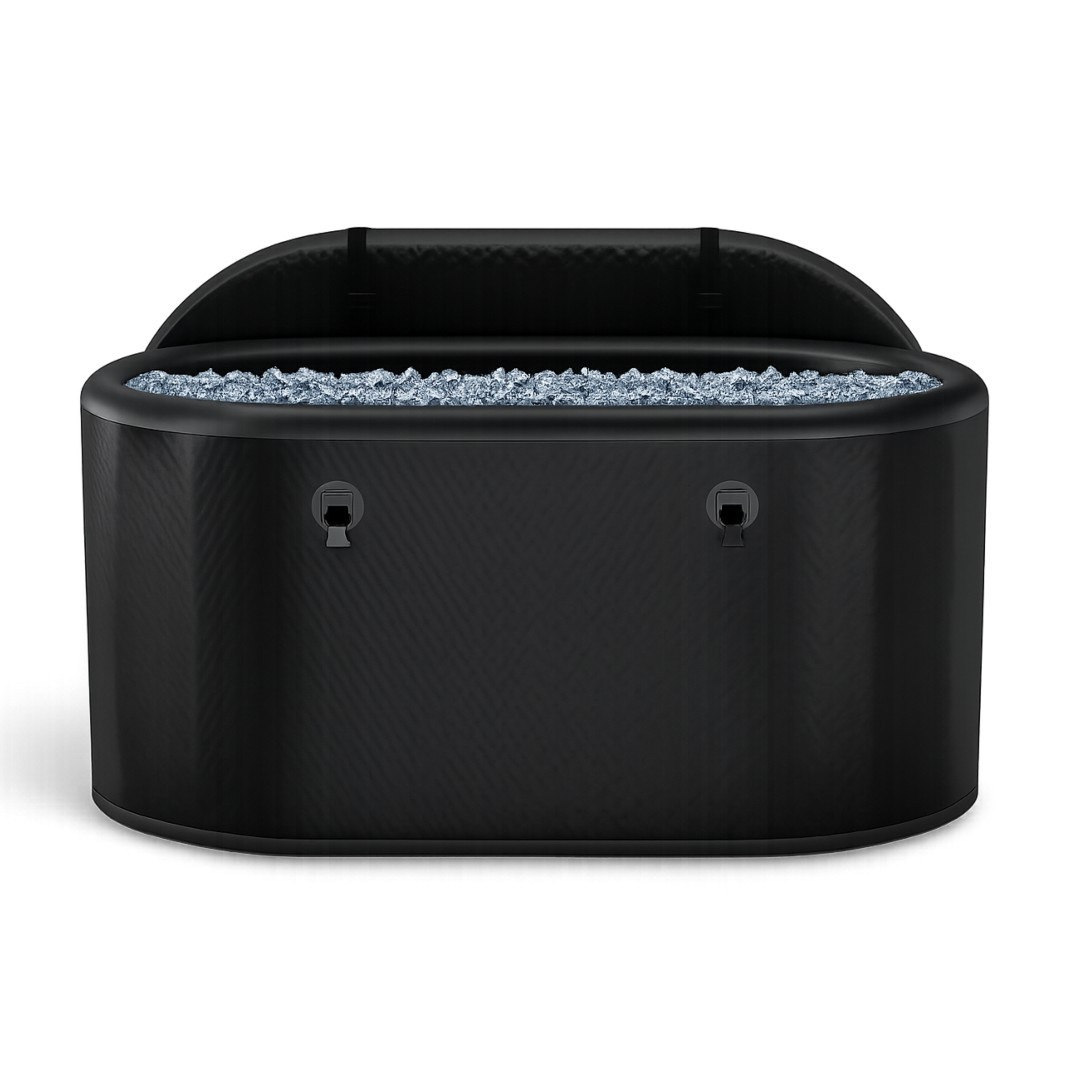
If you are committed: the Canuck Portable at $650 holds 420L (111 gallons) with insulated walls and needs no electricity. Depth is the thing to check against the protocol: the research measures immersion to the neck, so a tub you can only half-sit in is not running the protocol you read about.
If you want set-and-forget ($4,000+): A chiller-equipped tub like The Plunge lets you dial in an exact temperature and walk away. Fill once, set to 50°F, and plunge whenever you want. For someone following the Huberman protocol precisely, this removes the only remaining variable.
Common mistakes
Going too cold too fast. The protocol works at 55°F. You do not need 39°F water to get the dopamine response. The Šrámek study used 57°F. Colder is not better. Consistency at a moderately cold temperature beats sporadic extreme cold.
Chasing the feeling instead of the protocol. The dopamine response is happening whether or not you feel a dramatic rush. Some sessions feel transformative. Others feel unremarkable. The neurochemistry does not care about your perception. It responds to the temperature stimulus.
Hot shower immediately after. This blunts the norepinephrine response. Let your body shiver and rewarm on its own. The discomfort after the plunge is part of the protocol, not a problem to solve.
Inconsistency. Three sessions this week, zero next week, five the week after. This is less effective than a steady two sessions per week every week. The adaptations are cumulative. Regularity beats intensity.
The bottom line
Huberman's protocol is not complicated: get cold, stay in for a few minutes, do it 2–4 times a week, total 11+ minutes. The research behind it is solid. The dopamine and norepinephrine increases are well-documented and the metabolic benefits are real.
The only thing that matters is whether you actually do it consistently. Everything else (the exact temperature, the perfect duration, the optimal time of day) is secondary to showing up and getting in the water.
Sources: Šrámek et al., European Journal of Applied Physiology (2000); Søberg et al., Cell Reports Medicine (2021); Huberman Lab Podcast episodes on deliberate cold exposure.