How they heat you differently
Traditional sauna (Finnish dry sauna): Heats the air to 165–212°F (75–100°C). Your entire body (head, torso, limbs) is immersed in hot air. Heat reaches you from all directions simultaneously. Your skin temperature rises, blood vessels dilate, heart rate increases, and your body activates cooling mechanisms. The ambient temperature is uniform, and every inch of your body receives comparable heat exposure.
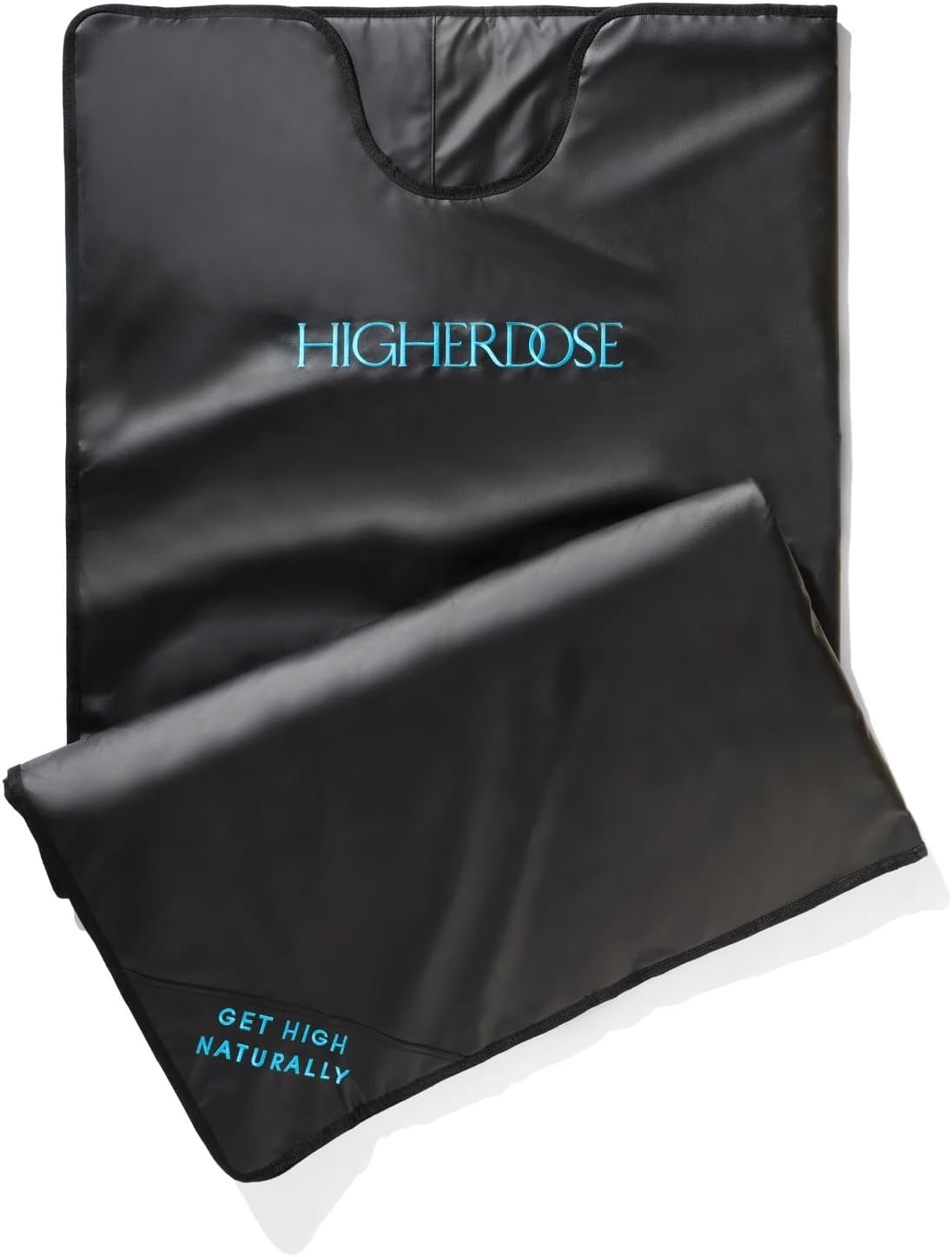
Infrared sauna blanket: Uses far-infrared heating elements embedded in the blanket lining to heat your body directly through contact and radiant heat. Operating temperatures are much lower, typically 95–176°F (35–80°C). The heating is contact-dependent: areas pressed against the blanket get more heat than areas that are not. Your head and often your arms remain outside the blanket, which keeps you cooler overall.
This difference in heating method is the core of the debate. Traditional saunas heat you uniformly from outside in. Blankets heat you unevenly from contact surfaces. Both can raise core temperature sufficiently to produce a meaningful sweat, but the path to getting there is different.
Where blankets match traditional saunas
Core temperature elevation. Both raise core temperature by 1–2°F when used at appropriate settings for 20–30 minutes. This is the threshold that triggers cardiovascular and hormonal responses.
Sweating. A quality blanket at 150°F+ for 30 minutes will produce a heavy sweat session comparable to a moderate traditional sauna session. Many users report sweating more in a blanket because the material traps moisture against the body.
Cardiovascular stress. Heart rate increases during blanket use are comparable to moderate exercise, similar to what traditional saunas produce. This is the mechanism behind the cardiovascular benefits documented in the Finnish research.
Relaxation and mood. Both trigger endorphin release and activate parasympathetic nervous system responses after the session. The post-sauna calm is reported by users of both formats.
Accessibility. This is where blankets win decisively. A $300 blanket that you use 5 times a week delivers vastly more total heat exposure than a $5,000 sauna you use once a month at the gym.
Where blankets fall short
Heat distribution. This is the blanket's biggest limitation. In a traditional sauna, heat surrounds you uniformly. In a blanket, areas with poor contact (the sides of your body, spaces where the blanket does not press against skin) receive less heat. Your front may be 160°F while your back is substantially cooler. This uneven distribution means some areas of your body are getting a full dose while others are not.
Head exposure. In a traditional sauna, your head is in the heated environment. This matters for respiratory benefits (improved lung function, nasal passage clearing) and potentially for the neurological benefits documented in dementia research. In a blanket, your head stays cool, which is more comfortable but eliminates the full-body heat immersion.
The experience. A traditional sauna (the silence, the heat on your face, the ritual of ladling water on stones) is a qualitatively different experience from lying wrapped in a blanket on your couch. For many people, the ritual itself is part of the benefit. A blanket is functional. A sauna is an experience.
EMF and material concerns. Because blanket heating elements sit directly against your body, EMF (electromagnetic field) exposure is higher than in a traditional sauna where heaters are mounted on walls. Quality brands like BON CHARGE and Heat Healer have addressed this with low-EMF engineering and third-party testing. Cheaper blankets may not have these safeguards.
The decision framework
Buy a sauna blanket if: you want to start a regular sauna practice with minimal investment, you live in a small space, you want portability, or you are testing whether you will actually commit to regular heat therapy before investing in a permanent setup. A blanket used consistently will deliver more health benefit than an expensive sauna used sporadically.
Invest in a traditional or infrared sauna if: you have the space and budget, you value the immersive experience, you plan to use it as a household amenity for years, or you want the closest match to the Finnish research that drives the health claims. A home infrared sauna cabin ($2,000–$5,000) is the best middle ground: lower temperatures than Finnish saunas but full-body immersive heat, and they fit in a spare corner.
The hybrid approach: Many serious sauna users start with a blanket, prove the habit, then upgrade to a cabin while keeping the blanket for travel or quick weeknight sessions. You do not have to choose one forever. You can upgrade as your practice evolves.
The bottom line
A sauna blanket is not a replacement for a traditional sauna. It is an accessible alternative that delivers the core physiological benefits (elevated core temperature, cardiovascular stress, sweating, relaxation) at a fraction of the cost and space requirement. For most people, the limiting factor is not the quality of the sauna. It is whether they use one at all. A $300 blanket used four times a week beats a $5,000 sauna you visit twice a month.
Sources: Laukkanen et al., JAMA Internal Medicine (2015); Laukkanen & Kunutsor, Temperature (2024); Mayo Clinic Proceedings (2018).