What is happening at the cellular level
Red light therapy (technically called photobiomodulation) works by delivering specific wavelengths of light (typically 630–670nm red and 810–850nm near-infrared) to your skin and tissues. These wavelengths are absorbed by cytochrome c oxidase in the mitochondria, boosting ATP production. More ATP means more cellular energy for repair, regeneration, and collagen synthesis.
A 2014 study published in Photomedicine and Laser Surgery exposed 136 volunteers to red and near-infrared light over 30 sessions and found significant improvements in skin feeling, complexion, and measurable increases in intradermal collagen density. The improvements were statistically significant, but they took 30 sessions to achieve.
This is the reality of red light therapy: it works by giving your cells more energy to do what they already do. It does not force a response. It supports one. And support takes time.
The realistic timeline
Week 1–3: Circulation and surface-level changes. The first thing most people notice is a subtle glow after sessions: skin looks slightly more alive, slightly pinker. This is not collagen yet. It is vasodilation, which means increased blood flow to the skin surface. Some people also notice reduced redness or irritation, particularly if they have rosacea-prone skin. Pain relief from joint or muscle soreness can appear within the first few sessions, as near-infrared light reduces inflammation.
Week 4–8: Texture and tone improvements. This is when the real changes start becoming visible. Collagen production takes roughly 4–6 weeks to translate into observable skin changes. Fine lines begin to soften, particularly around the eyes and forehead. Acne lesions may reduce. A 2025 meta-analysis in JAMA Dermatology found at-home LED devices produced approximately a 45% reduction in acne lesions over 4–8 weeks. Skin texture feels firmer and smoother.
Week 8–12+: Structural changes. Measurable collagen density increases. The 2014 study found statistically significant improvements in collagen after 30 sessions. Scars and hyperpigmentation begin to fade as melanin regulation normalizes. This is where the before-and-after photos people post online come from, not from week two.
3–6 months (hair growth): Hair regrowth is the slowest benefit. Studies on low-level light therapy for androgenetic alopecia show increased hair density and thickness, but only after consistent use over several months. A separate study by Leavitt et al. (2009) found increased hair counts at 26 weeks compared to placebo.
What affects how fast you see results
Device power matters. A $30 Amazon wand and a medical-grade panel are not delivering the same energy to your cells. Irradiance (measured in milliwatts per square centimeter) determines how much light energy actually reaches your tissue. Higher irradiance means shorter sessions for the same dose. Lower irradiance means you need longer sessions, and if you are not compensating for that, you are simply underdosing.
Distance from the device matters. Irradiance drops off significantly with distance. A panel that delivers 100 mW/cm² at 6 inches may deliver only 25 mW/cm² at 18 inches. If you are using a panel, position matters as much as session length.
Consistency is non-negotiable. Three sessions per week is the minimum for most goals. Five sessions per week accelerates results. Two sessions per week will produce some benefit but at a much slower rate. The research consistently shows that frequency and regularity matter more than individual session duration. Ten minutes, five days a week, beats thirty minutes twice a week.
What you are treating matters. Surface-level concerns like skin glow and mild acne respond fastest. Deep tissue concerns like joint pain and scar healing take longer. Hair regrowth is the slowest because follicle cycling operates on its own timeline.
Choosing the right device for your timeline
Your device choice directly affects how quickly you see results. Here is how to match your expectations to your investment:
LED face masks ($100–$400): Convenient, consistent dose to the face. Good for skin rejuvenation and acne. The controlled distance means you get a reliable dose every session without guessing. Most masks are designed for 3–10 minute sessions. These are the best starting point for people focused on facial skin.
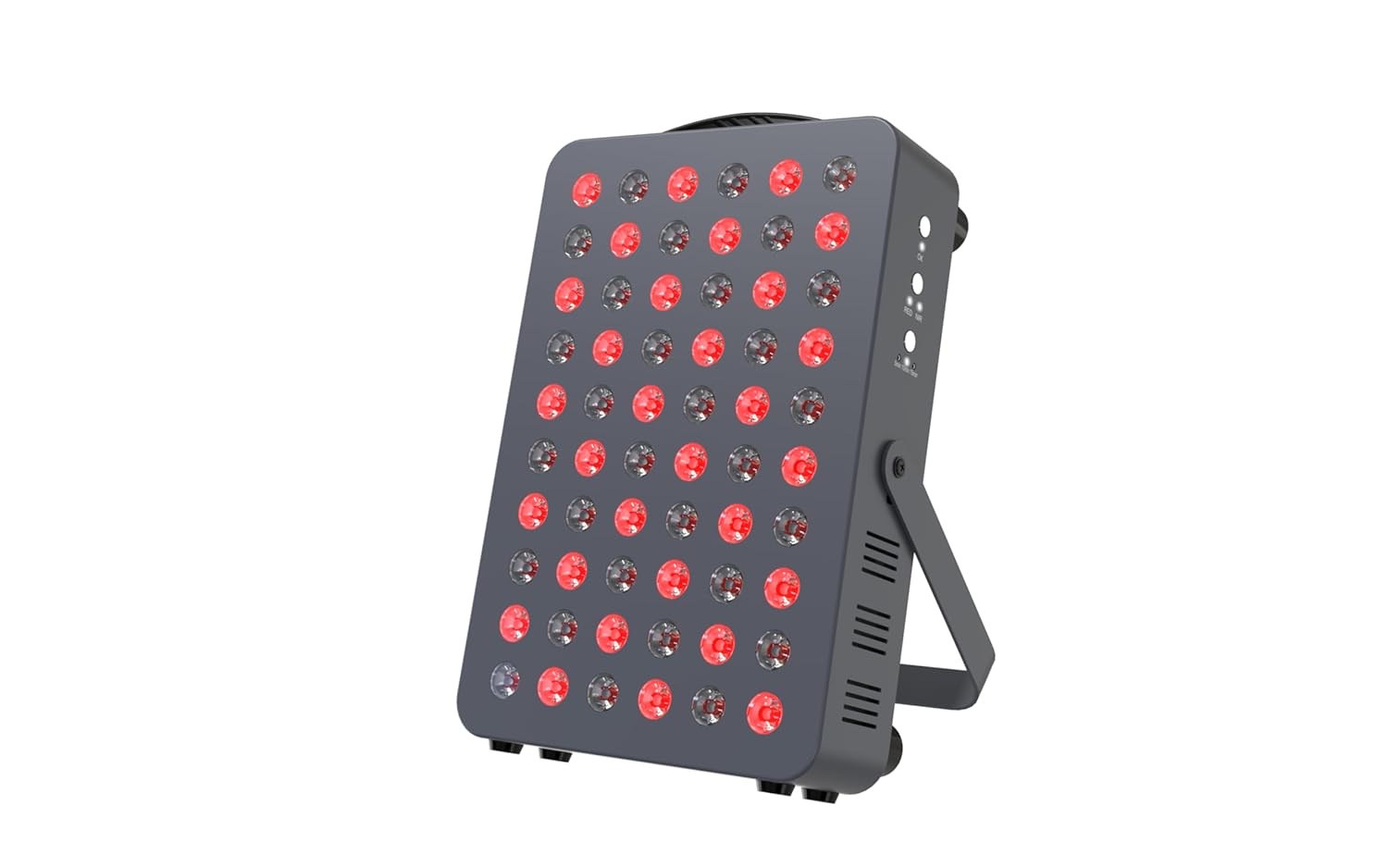
Tabletop or half-body panels ($200–$600): More versatile than masks. Can target face, chest, back, or joints. Higher irradiance than most masks, which means faster dosing. The trade-off is that you need to position yourself correctly: too far away and you are underdosing.
Full-body panels ($800–$1,500+): The highest-dose option for home use. Full-body coverage means you can treat multiple areas simultaneously. These are the closest to clinical-grade devices and typically deliver results on the faster end of the timeline described above. For serious use (joint health, full-body skin rejuvenation, athletic recovery) these are the move.
The honest bottom line
Red light therapy works. The research supports it for skin rejuvenation, acne, pain relief, wound healing, and hair growth. But it works on biology's timeline, not yours. Expect subtle changes in weeks, visible changes in 1–2 months, and structural changes in 3+ months.
The biggest reason people quit is unrealistic expectations. They expect week-one miracles, see nothing dramatic, and stop. The people who see real results are the ones who treat it like brushing their teeth, a daily habit they do not think about, and the benefits accumulate quietly in the background.
Sources: Wunsch & Matuschka, Photomed Laser Surg (2014); Ershadi et al., JAMA Dermatology (2025); Leavitt et al., Clin Drug Investig (2009); Jagdeo et al., J Biophotonics (2020).