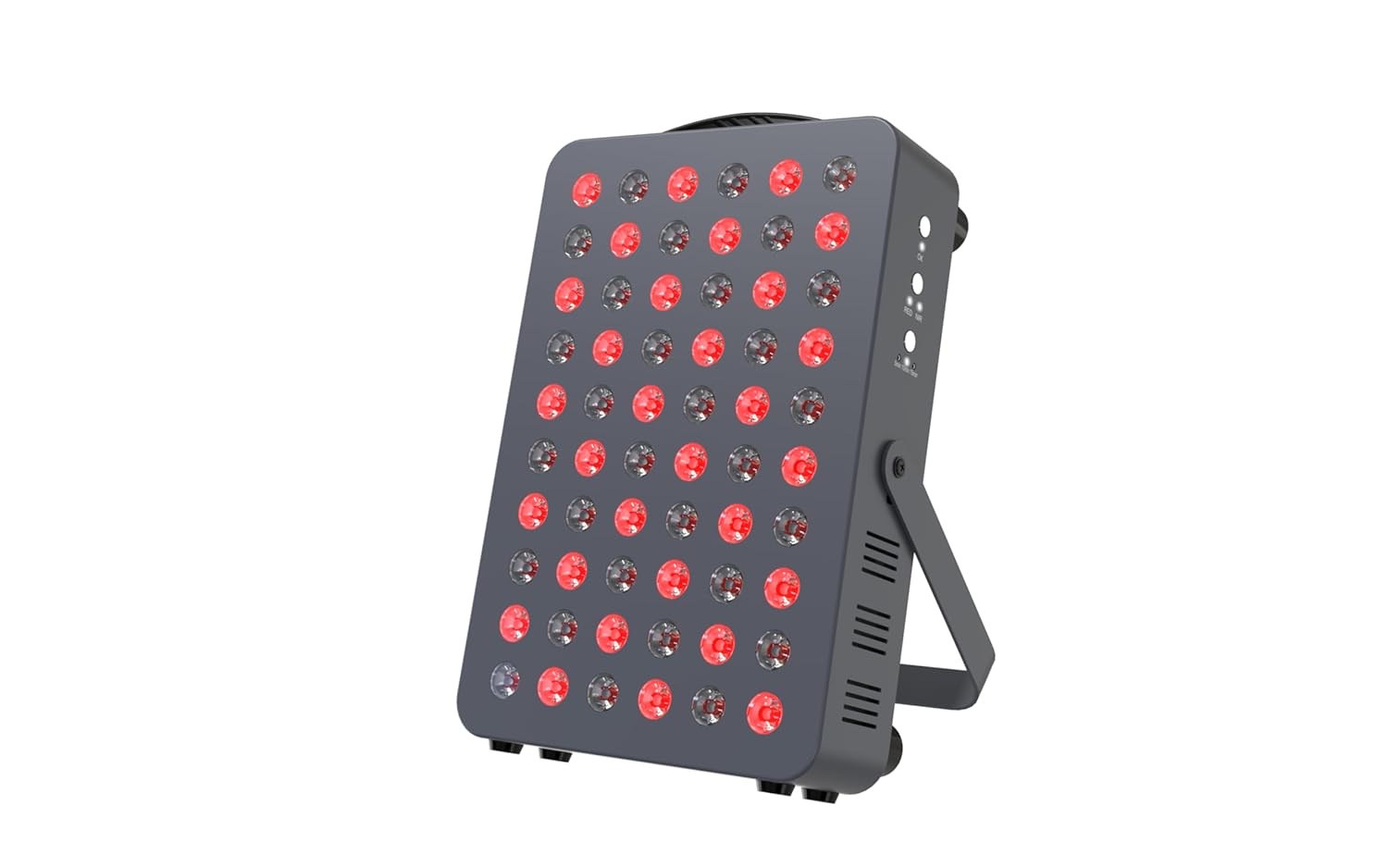
Wavelengths
The MitoPRO X offers 6 wavelengths: 630, 660, 810, 830, 850, and 940nm. The BioMax 900 offers 5: 630, 660, 810, 830, and 850nm. The only difference is the 940nm wavelength on the MitoPRO X.
940nm is in the far-NIR range and has emerging research on water molecule absorption in tissue and possible additional anti-inflammatory effects. The evidence is thinner than for 660nm and 850nm. It is a bonus wavelength, not a primary driver. In practice, both panels cover the two most researched and therapeutically validated wavelengths (660nm and 850nm) at comparable irradiance.
For the vast majority of applications (skin, recovery, joint pain, sleep) the extra wavelength is a marginal difference, not a decisive one.
Irradiance
The MitoPRO X delivers 150+ mW/cm² at 6 inches. The BioMax 900 delivers 145+ mW/cm² at 6 inches. Both figures are confirmed by independent third-party testing, not manufacturer-reported-only numbers.
At 5 mW/cm² difference, the practical gap is negligible. A 20-minute session at 150 mW/cm² delivers 180 J/cm². At 145 mW/cm², the same session delivers 174 J/cm². Both are well within the therapeutic window for every studied application. You would need to add roughly 30 seconds to a BioMax 900 session to match the MitoPRO X dose exactly.
This is not a meaningful differentiator. Both panels deliver therapeutic irradiance at treatment distance.
App control and usability
The MitoPRO X has a touchscreen panel and a Bluetooth smartphone app that allows you to set wavelength combinations, session duration, and intensity independently. For users who want to run specific protocols (red-only for skin, NIR-only for deep tissue, combined for general recovery) the app makes this precise and consistent.
The BioMax 900 has a standard button-based control panel. You can toggle between modes, but there is no app and no protocol-level customization. For users who run one consistent protocol (combined red + NIR, same duration every time), this is not a limitation. For protocol experimenters and biohackers, the MitoPRO X app is a real advantage.
FDA registration and clinical credibility
The BioMax 900 holds FDA Class II Medical Device registration. This requires the manufacturer to submit performance and safety documentation to the FDA. It is not a self-certification. No other consumer panel on this list carries this designation.
What FDA Class II means practically: the device has been reviewed against established safety standards, the manufacturing process is documented, and the brand is accountable to ongoing FDA oversight. It does not mean the FDA has validated specific health claims, but it does mean the device is held to a higher regulatory standard than unregistered competitors.
For buyers who want institutional validation (medical professionals, cautious first-time buyers, or anyone who wants the most defensible purchase) the BioMax 900's FDA status is a genuine differentiator.
Trial period and risk
PlatinumLED offers a 60-day money-back trial on the BioMax 900. Mito Red Light does not offer a comparable trial period. For a $1,000+ purchase, 60 days is meaningful. It is enough time to run a proper protocol and assess results before committing.
If you are uncertain whether red light therapy will work for your specific application, the BioMax 900's trial period reduces financial risk substantially. You can run 8–12 weeks of consistent sessions and return the panel if you see no benefit.
Build quality and warranty
Both panels carry 3-year warranties, matching the best in the category. Build quality is comparable: aluminum housing, active cooling fans, standard hanging hardware included. The MitoPRO X has a more modern aesthetic with the touchscreen; the BioMax 900 is more utilitarian. Neither will fail from normal use within the warranty period based on long-term owner reports across both brands.
Fan noise is present on both panels. The MitoPRO X fans are slightly louder at max output. Neither is silent, so factor this into placement if you use it in a bedroom.
The verdict
Buy the MitoPRO X if: You want the most wavelength breadth, app-based protocol control, and slightly higher irradiance. Best for biohackers, athletes running specific protocols, and users who want a modular system they can expand over time.
Buy the BioMax 900 if: You want FDA-registered hardware, a 60-day trial period to validate your investment, and the longest track record in the category. Best for cautious buyers, medical professionals, and anyone who wants institutional credibility behind their purchase.
Not ready for $1,000+? The Rouge G4 Pro ($849) delivers comparable irradiance with a 3-year warranty and pulsing mode at $250 less. The Hooga HG300 ($170) is the right entry point if you want to validate red light therapy before committing to a premium panel.