How wavelengths work
Light is measured in nanometers (nm), which is the length of the light wave. Shorter wavelengths are higher energy but penetrate less deeply. Longer wavelengths are lower energy but reach deeper into tissue. Red light therapy operates in what scientists call the "therapeutic window" (roughly 600–1000nm) where light can penetrate skin and tissue without causing damage.
Within this window, two ranges dominate the research: visible red (620–680nm) and near-infrared (780–900nm). Each interacts with your cells differently because they are absorbed by different chromophores (molecular structures that respond to light) at different depths.
The key absorber is cytochrome c oxidase, the enzyme in your mitochondria that drives ATP production. It has absorption peaks at approximately 660nm and 830nm, which is why these two wavelengths appear most frequently in clinical research.
Red light: 630–660nm
Visible red light penetrates approximately 1–2mm into the skin, enough to reach the epidermis and upper dermis where collagen is produced, fibroblasts are active, and most skin-level processes occur.
Best for: wrinkle reduction, fine line softening, collagen production, acne, skin texture, wound healing, scar fading, rosacea management.
The research here is strong. A controlled trial with 136 subjects found that polychromatic red and near-infrared light produced statistically significant improvements in collagen density, skin complexion, and skin roughness. A 2025 meta-analysis of at-home LED devices for acne found approximately 45% reduction in inflammatory lesions using red and blue light combinations.
If your primary goal is skin, whether that is a younger-looking face, clearer complexion, or reduced scarring, 660nm is your anchor wavelength. This is what LED face masks predominantly use, and it is why they are effective for facial skin despite their relatively low power compared to panels.
Near-infrared: 810–850nm
Near-infrared (NIR) light is invisible to the naked eye and penetrates significantly deeper, reaching 2–4cm into tissue, including muscles, tendons, joints, and even bone. This deeper penetration is what makes NIR valuable for applications beyond the skin surface.
Best for: joint pain, muscle recovery, inflammation reduction, deep tissue healing, athletic performance, nerve function, circulation.
A 2024 systematic review of 10 studies on knee osteoarthritis found that photobiomodulation with near-infrared wavelengths significantly reduced pain at rest. Studies on athletic recovery show reduced delayed-onset muscle soreness when NIR is applied before or after exercise. The deeper penetration also means NIR reaches areas that visible red light simply cannot, making it essential for anyone using red light therapy for physical recovery rather than aesthetics.
If you are dealing with chronic joint pain, post-workout soreness, or deep tissue injuries, you need 850nm. A skin-focused 660nm mask will not get deep enough to help.
The emerging wavelengths: 940nm and beyond
Some newer devices include 940nm, an even deeper-penetrating near-infrared wavelength. The Mito Red MitoPRO X, for example, offers 6 wavelengths including 940nm. The research on 940nm is less extensive than 660nm or 850nm, but early evidence suggests improved circulation and deeper tissue penetration.
Should you prioritize 940nm? Not as your primary wavelength. Think of it as a bonus: if your device includes it alongside 660nm and 850nm, that is useful. If a device only offers 940nm, you are missing the two most researched and proven wavelengths.
How to choose based on your goals
Skin only (anti-aging, acne, complexion): A 660nm-focused device like an LED face mask or a smaller panel works well. You do not necessarily need deep-penetrating NIR for surface-level skin goals. Budget-friendly options in this category start around $100–$200.
Pain and recovery only (joints, muscles, inflammation): You need 850nm near-infrared and a device powerful enough to deliver meaningful irradiance at the depth of your target tissue. A face mask will not help your knees. A tabletop or full-body panel positioned close to the target area is the right tool.
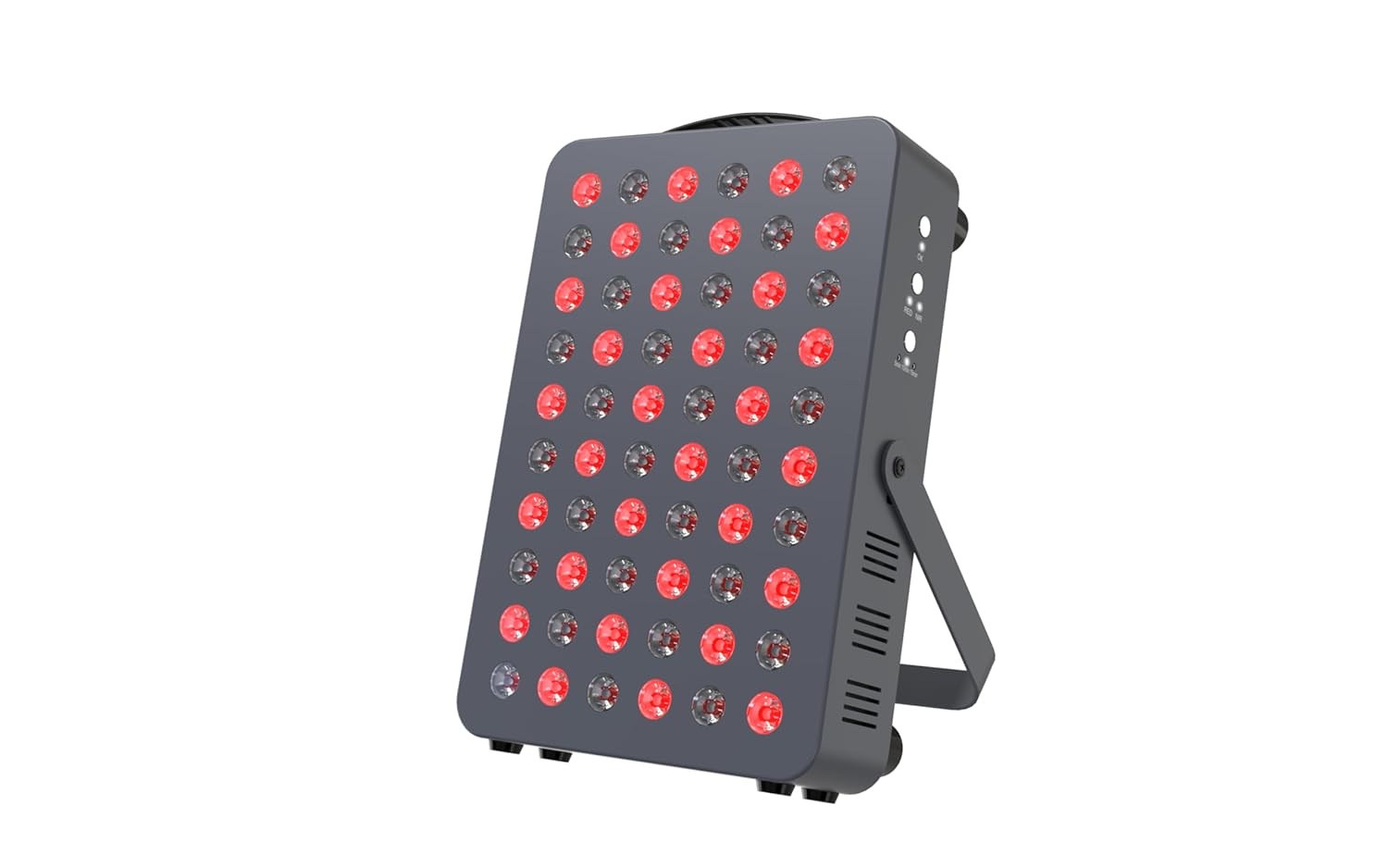
Both skin and recovery (most people): A dual-wavelength panel that combines 660nm and 850nm covers the full spectrum of research-backed benefits. This is what most serious users end up with. Panels in the $200–$600 range offer excellent dual-wavelength coverage for most home users. Full-body panels in the $800–$1,500 range are ideal for comprehensive coverage.
The one thing to avoid: devices that list wavelengths vaguely ("red and infrared" without specifying nm) or that use wavelengths outside the researched ranges. If a device does not tell you exactly what wavelengths it emits, it is not worth your money.
The bottom line
660nm for skin. 850nm for deep tissue. Both for the most complete benefit. Everything else is a refinement of these two fundamentals.
Do not overthink the wavelength specs. The difference between 630nm and 660nm is minor, and the difference between 810nm and 850nm is minor. What matters far more is whether your device delivers adequate irradiance at the right wavelength range, and whether you use it consistently. A perfectly-specced device you never turn on is worth less than a slightly imperfect one you use every day.
Sources: Wunsch & Matuschka, Photomed Laser Surg (2014); Oliveira et al., Osteoarthritis Cartilage (2024); Ershadi et al., JAMA Dermatology (2025); Leal-Junior et al., Lasers Med Sci (2015).